Körber Supply Chain Achieves Gateway Certified® Accreditation

Gateway Checker® is excited to announce Körber Consulting has successfully attained Gateway
Certified® EPCIS Verify™ accreditation. A leading global technology group, Körber has been
providing innovative supply chain solutions for decades. As the industry’s leading independent
GS1 Conformance Testing Service, Gateway Checker applauds Körber’s accomplishment, which
demonstrates their commitment to pharmaceutical supply chain integrity, data interoperability,
and overall patient safety.

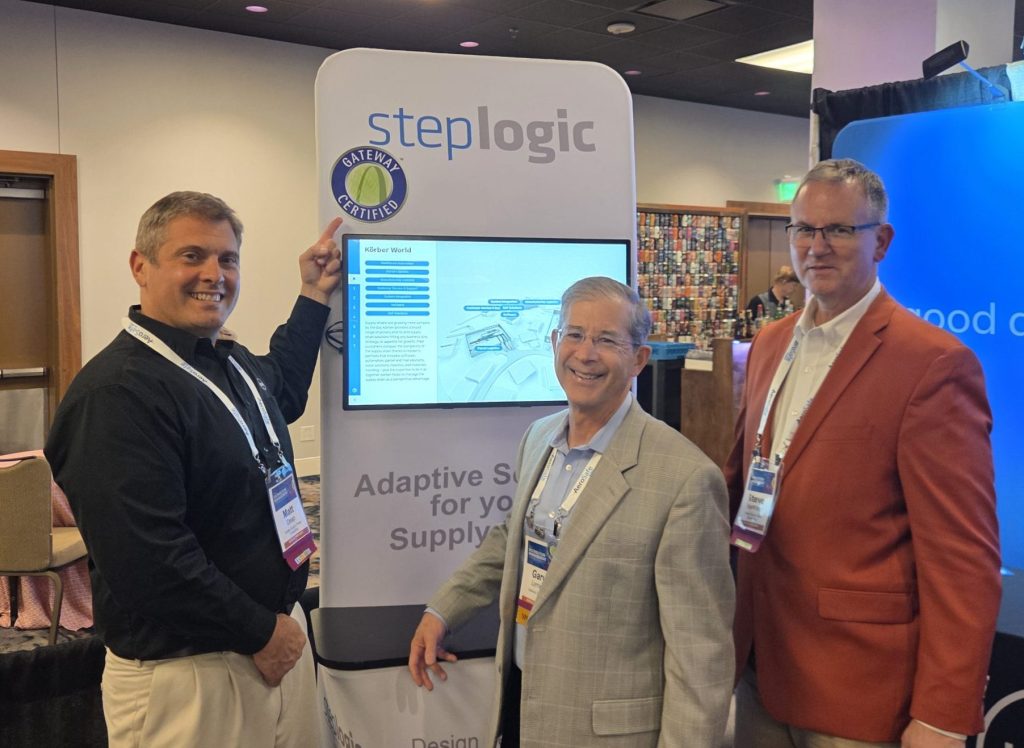
Koerber and Gateway Checker at the 2026 DMC Conference

Körber Supply Chain Team (Matt Deep, left, and Steve Markham, right) with Gateway Checker
President, Gary Lerner, at the 2026 HDA Distribution Management Conference in Austin, Texas.


Leveraging its TraceReady™ application for drug quality assurance, Gateway Checker launched
the Gateway Certified conformance program after producing files pursuant to the strict GS1 US
Implementation Guideline. By earning the Gateway Certified seal of approval, supply chain
partners can be confident in data quality while providing their customers file integrity
confidence.

“The certification process helped us take a closer look at how our outbound files are structured,
validated, and delivered,” said Sherri Bauman, Quality and Testing Manager at Körber. “This
allows Körber to produce fully conformant files aligned with GS1 standards, highlighting
improvements that support greater consistency and accuracy.”

Bauman added, “This milestone better positions Körber to meet current requirements and adapt more easily to future compliance needs, while supporting smoother data exchange for our partners and customers. This is a foundational step that improves data quality, supports scalability, and reinforces our commitment to standards-based compliance now and in the future.”

“When EPCIS solution providers commit to testing and compliance to interoperability
application standards, like Körber, pharmaceutical supply trade partners benefit,” said Gary
Lerner, President of Gateway Checker Corporation. “As more suppliers follow Körber’s lead,
drug transaction records will flow faster with fewer inaccuracies, minimizing supplier
disruption.”

To learn more about the Gateway Certified program, reach out to our team or visit our
website.

Click here to read the Körber press release.

Movilitas.Cloud Earns Gateway Certified™ Accreditation for VRS Solution


Movilitas.Cloud Logo

Movilitas.Cloud: VRS Verify™ Accreditation

Lexington, MA, March 14, 2025 – Gateway Checker, the industry’s leading independent GS1 Conformance Testing Service, today announced Movilitas.Cloud, as part of Engineering Industries eXcellence, has become the first product verification solution provider to successfully attain both Level 1 and Level 2 Gateway Certified™ VRS Verify™ accreditation.

The FDA Drug Supply Chain Security Act (DSCSA) requires Pharmaceutical trade partners to have systems to facilitate saleable returns verification. In response to regulation, the Verification Router Service (VRS) was developed by the Healthcare Distribution Alliance (HDA), aiming to automate verification requests and achieve near real-time responses.

With VRS systems, authorized pharmaceutical trading partners can confirm that the unique set of product information (lot number, expiration date, trade identifier, and serial number) assigned to a drug matches the information recorded by the manufacturer.

Successful system-to-system interoperability requires extensive testing and validation, and the cooperation and resource commitment of competitive systems. Up until now, VRS testing results are typically self-executed and reported by the solution provider, a tedious and often inaccurate approach to testing and validation. Gateway Checker developed an independent, unbiased VRS conformance testing platform, VRS Verify™, that quickly, robustly and reliably executes VRS test scenarios.

Demonstrating a commitment to supply chain integrity and DSCSA compliance, Movilitas.Cloud has become the first DSCSA solution provider to be awarded Gateway Certified VRS Verify™ accreditation.

“Gateway Checker has always been heavily involved in the development of the VRS standards and builds tools to measure the health of this multivendor platform,” said Marc Blekkink, Founder and Managing Director of Movilitas.Cloud. “We are very pleased that an independent organization has begun certifying these solutions, allowing the market to select a trusted partner for DSCSA verification requirements.”


Next Steps

  • For more information on VRS Verify™ and to receive a free product verification assessment, please complete the form at this link.
  • To check out Gateway Checker’s other suite of services designed for DSCSA Compliance, click this link.
  • To read the full press release from Movilitas.Cloud, click this link.
  • Media Contact: Gary Lerner – glerner@nullgatewaychecker.com

About Gateway Checker

Gateway Checker™ is a Software as a Service platform that facilitates product traceability, DSCSA compliance, and unambiguously verifies the interoperability readiness of serialized pharmaceutical transaction records. Drug manufacturers, repackagers, and distributors can quickly and continuously test, validate, and certify adherence to GS1 US Rx EPCIS and VRS product verification application standards. Gateway Checker is certified by the GS1 US RX EPCIS Testing Service Certification Program and is owned and operated by the Gateway Checker Corporation, a wholly-owned subsidiary of BrandSure, LLC.

Why You Need VRS Validation

female-pharmacist-with-table-checking-stock-pharmacy

Photo Credit: Freepik

The Importance of Validating Product-Verification Systems

As discussed recently, VRS Systems are the most effective way to verify product in accordance with DSCSA regulations. Additionally, the widespread use of VRS Systems provides invaluable information to trade partners, including product-specific information such as supply status by trade partner, volume of activity, and location.

Furthermore, immediate product verification provided by VRS systems proactively prevents non-suitable product from entering the supply chain, preventing timely and expensive recalls. The product-verification and commerce-related benefits of VRS Systems exemplify their value to any trade partner within the pharmaceutical supply chain.

The only way trading partners can benefit from VRS systems is if these systems function properly, and produce accurate and timely responses to verification requests. However, ensuring functionality is easier said than done.

A successful VRS network requires a common Product Identifier (PID) lookup directory, as well as a precise alignment of request/authentication/response functionality between multiple solution providers. Solution providers typically rely on self-testing to establish system readiness, and given the abundance of competing solution providers, VRS System validation is not straightfoward.

Additionally, since product verification requests originate external to a solution provider’s environment, pharmaceutical manufacturers can’t validate system readiness independently; manufacturers must rely on external testing to ensure their systems are working properly and are prepared to support specific use cases.

The Accreditation of VRS Systems with VRS Verify™

In recognizing the importance of properly functioning VRS Systems, particularly as more authorized trading partners and solution providers began adopting them, Gateway Checker developed the VRS Verify™ accreditation program.

The first of its kind, VRS Verify™ offers comprehensive, objective testing, documented evidence, and conformance certification for manufacturers and solution providers to ensure alignment with product verification application standards. These standards include the GS1 Lightweight Messaging Standard for DSCSA Verification of Product Identifiers, as well as the Healthcare Distribution Alliance (HDA) VRS Working Group Verification Router Service System Readiness Testing protocols.

VRS Systems who meet the protocols set forth by VRS Verify™ assure owners and operators of proper VRS functionality, providing both themselves and their trading partners the confidence that product verification needs will be met as necessary.

VRS Verify™:

  • Ensures the VRS system produces accurate and timely responses to verification requests.
  • Automatically generates and executes VRS validation test scripts.
  • Generates documentary evidence of tests executed and the results.
  • Assesses readiness of the VRS system to meet user and industry requirements.

To learn more about VRS Verify™, and for a complimentary product verification assessment, visit this link.

Who Needs Product Verification, and Why It’s Important for the DSCSA and Beyond

pharmacist-white-uniform-walking-by-shelf-with-medicines-checking-inventory

Photo Credit: Freepik

How VRS Benefits the Entire Pharmaceutical Supply Chain

Last Friday, I described the importance of Verification Router Service (VRS) systems, introducing the benefits they provide within the pharmaceutical supply chain. As emphasized previously, the value of VRS systems extends beyond saleable returns, helping streamline product verification for trading partners and ensure product legitimacy. In this article, I dig deeper into the importance of product verification, and specifically, how VRS systems enhance supply integrity beyond saleable returns.

Manufacturers:

As the starting point of the supply chain, manufacturers are responsible for establishing accurate drug transaction records for each ownership change; they must inform trade partners when product is substandard, illegitimate, or for some reason is no longer fit for consumption. According to the DSCSA, manufacturers are required to respond to requests for product verification within 24 hours for any authorized trade partner, regardless of any direct relationship with that trade partner.

VRS systems allow manufacturers to confirm product identifier information (lot number, expiration date, trade identifier, and serial number) to other trade partners across the supply chain, within seconds. Absent a VRS, manufacturers must provide another method that executes the same product verification response (e.g. utilizing email or the telephone); alternatives are not only less effective, but also, more expensive.

Manufacturers who use VRS systems gain insight into all product verification requests, which include requester identification, email, phone number, and location. With widespread utilization of VRS for status checks, incoming inspection, and outbound checking, manufacturers gain additional product-specific supply status by trade partner, volume of activity, and location. VRS also enables early warning of nefarious activity, including product diversion and counterfeit activity.

Distributors:

Under the DSCSA, wholesale distributors are required to verify the authenticity of returned products before these goods re-enter the supply chain. If there is evidence that a returned product has been properly handled and is not expired or damaged, and its product identifier is verified, then that product can be resold. VRS systems provide immediate product verification, minimizing determination delays and helping prevent quarantines that may impede medication delivery.

Expanded use of VRS, beyond saleable returns, can facilitate confidence in authenticity and suitability for further distribution.  From inception, VRS is enabled to indicate if a specific product is suspect, illegitimate, or recalled. Integrating product verification requests into a distributor’s workflow can make the process more efficient and seamless, while yielding proactive awareness of pharmaceuticals not suitable for further distribution.

Widespread VRS use by distributors enhances the aforementioned benefits to manufacturers.  However, distributors are likely to consider expanding use of VRS only after increased participation by manufacturers.  So chickens and eggs need to worry less about which comes first, and commit to greater utilization for the benefit of the US pharmaceutical industry.

Dispensers:

For dispensers, product verification through VRS systems allows for authentication of products both received from distributors, and product brought to their attention by patients. In a recent investigation of suspect product, the Arkansas Board of Pharmacy demonstrated the value of VRS systems by successfully detecting counterfeit Ozempic.

The efficacy of these systems in preventing suspect and substandard product from reaching patients results in greater consumer trust in the supply integrity of pharmaceuticals, and possibly individual pharmacies as well.

Conclusion

VRS Systems are vendor-independent—regardless of a trade partner’s role in the pharmaceutical supply chain, there’s substantial benefits to implementing these systems. Instantaneous product verification minimizes supply chain disruptions and helps prevent substandard medicines from reaching (and potentially harming) patients.

With the DSCSA deadline approaching quickly, the importance of product verification has increased substantially. VRS Systems are the most effective way to verify pharmaceuticals in accordance with DSCSA regulations. Additionally, widespread use of VRS systems can provide reliable, actionable intelligence while improving drug supply security.

If interested in increasing the use of VRS, it is a challenge to test suitability and readiness to support specific use cases. Gateway Checker’s VRS Verify™ executes drug verification requests external to the product verification responders system, enabling the ability to emulate real-world conditions and validate the functionality of the response, including access to the lookup directory.

VRS Verify™:

  • Ensures the VRS system produces accurate and timely responses to verification requests.
  • Automatically generates and executes VRS validation test scripts.
  • Generates documentary evidence of tests executed and the results.
  • Assesses readiness of the VRS system to meet user and industry requirements.

Solution providers and manufacturers that successfully execute VRS Verify™ test scripts can become Gateway Certified, the industry’s seal-of-approval that a VRS system functions as necessary and adheres to strict industry requirements.

To learn more about VRS Verify™, and for a complimentary product verification assessment, visit this link.


Coming Up Next: “Ensuring VRS System Functionality: Why VRS Validation is Essential”
 

What Isn’t Included in the Recent Exemption

Who Does It Apply To?

Recently, I shared that eligible trading partners were temporarily exempted from specific components of the Drug Supply Chain Security Act, “Latest DSCSA Exemption”. However, considering the stabilization period ends tomorrow, I thought I’d share some further insights on what isn’t part of the recent exemption.

First, as noted in my previous posts, the recent exemption doesn’t apply to everyone. As the FDA emphasized in their release, trading partners who are eligible for the exemption include “those who have initiated their systems and processes by successfully completing data connections with their immediate trading partners”, and “those who initiated processes including documentation of efforts to establish data connections but were not able to fully complete them with all immediate trading partners.” In other words, now is not time for trading partners to start initiating their systems and processes (that ship has sailed)—it’s time for trading partners to refine them.

Progress Necessary

The FDA wants to see progress made toward finalizing systems and processes capable of exchanging DSCSA transaction information and transaction statements with one another. Key enablers of this progress include:

  • Reconciling receipts of digital and physical representations of Serialized Information
  • Investigating suspect process
  • Verifying product for saleable returns
  • Responding to a trace request

In addition to documentation of progress, the FDA expects trading partners who plan to rely on the extension to communicate their intentions with immediate trading partners.

The FDA, similarly to when they announced their decision to implement the stabilization period, does not want trading partners to view this exemption as a “justification for delaying efforts to implement enhanced drug distribution security requirements.”

The deadline for compliance will come sooner than many expect, especially for manufacturers. In fact, there are only 129 working days until the May 27th, 2025 EDDS deadline.

Risks of Noncompliance

For those who haven’t initiated these systems and processes, punishments could be severe, and include:

  • Regulatory Risks: Potential for regulatory actions like warning letters, import alerts, or product seizures.
  • Operational Disruptions: Potential for supply chain disruptions and delays in product acceptance.
  • Market Exclusion: Risk of being completely excluded from the supply chain

Partners who do not meet the exemption criteria will need to submit a Waiver, Exception, or Exemption, or will more than likely face the consequences outlined above.

Stabilization Behind Us

Navigating DSCSA compliance amidst the constant changes to legislation can be tricky. However, one thing is for sure: if your business lacks systems and processes in place to implement EDDS requirements, the business is at risk.

With stabilization behind us, let Gateway Checker put you on the fast path towards supply integrity and regulatory compliance. Visit our website to view our services, or contact our team with any questions.